AI writing tools can help writers brainstorm, draft, and edit content more efficiently. But as AI detectors become more advanced, simply copying and pasting AI-generated text can lead to flagged content and raise concerns about originality.
The responsible way to avoid AI detection is to focus on improving authenticity and readability. By editing AI-assisted drafts, adding personal insights, and writing in a natural tone, writers can create content that feels more human, original, and engaging.
Key takeaways
Avoiding AI detection responsibly is about improving the authenticity, originality, and readability of your content rather than trying to “trick” detection tools.
The best approach is to use AI as a writing assistant for brainstorming, outlining, or drafting while adding your own voice, examples, and human insight through careful editing.
Natural writing habits like varying sentence structure, using conversational language, and including specific details help AI-assisted content sound more human and engaging.
AI detectors are becoming an essential tool for educational institutions evaluating student submissions. These tools analyze writing patterns typically associated with large language models (LLMs) such as ChatGPT, Gemini, and Claude.
By early 2026, more than 60% of colleges and universities had adopted some form of AI detection technology.
Quillbot’s AI Detector can be used to review text for potential AI-generated patterns and help ensure transparency in academic work.
AI detectors are quickly becoming part of a copywriter’s toolkit. Whether you’re working on blog posts, landing pages, or SEO content, there’s growing pressure to prove your writing is original.
But here’s the catch: if you write for the detector, your content will start to feel unnatural.
The better approach is to treat AI detection as a support tool instead of the final decision-maker. When used correctly, it can actually help you write more clearly and authentically.
Quickly check for originality with Quillbot’s AI Detector!
AI tools have quietly found their way into classrooms everywhere. Students use them to brainstorm, draft, and refine their work, and teachers are increasingly asking, ‘How do you tell the difference between a student’s own thinking and a polished AI output?’ That’s where an AI detector for teachers comes in.
Used well, an AI detector for teachers becomes a practical ally—flagging submissions that need a closer look, saving hours of manual review, and supporting the kind of professional judgement great teaching already relies on.
This guide breaks down how to use an AI detector for teachers effectively in your classroom.
TipUse an AI Detector as a smart first filter. It surfaces which submissions deserve your closest attention so you can focus your time and expertise where they’ll have the most impact.
Published on
April 30, 2026
by
Meenal Gandhi.
Revised on
May 20, 2026
AI-generated content is now a core part of how businesses operate, from marketing copy to internal communication. But as output scales, so does the need to ensure everything aligns with your brand’s voice and standards. That’s where AI detectors can help.
Used effectively, they act as a quality checkpoint, flagging content that needs review, maintaining consistency at scale, and protecting brand trust.
This guide shows how businesses can integrate AI detectors into their workflows for better, more reliable output.
TipUse Quillbot’s AI Detector as a first filter to quickly spot content that needs closer review so your team can focus where it matters most.
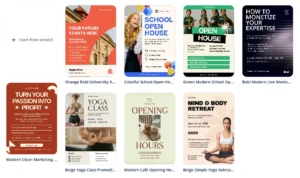
If you’re a business builder wondering how your competitors are creating such professional-looking posters, the answer could be that they’re using a solution like Quillbot’s free poster templates.
From tutors and consultants to real estate agents, event planners, and market sellers, one-person business owners are turning to poster templates to design polished marketing materials that make a strong impression on their customers.
Read on to find out how you can use poster templates to connect with your clients and customers.
Planning a trip is hard work, even for the most zealous travel lovers. You have to juggle multiple websites—for airlines, hotels, attractions, and practical information—sometimes in a foreign language. You may also need various converters on hand to make sense of currencies, temperatures, and distances.
Thankfully, AI can help. A trip-planning tool like Quillbot’s free AI Trip Planner can help you outline an itinerary customized to your liking in moments. Keep reading to learn how to use the AI Trip Planner and see some examples of trips it’s created.
AI tools have quietly become part of the everyday workflow for teams working in Machine Learning (ML). From generating documentation to drafting experiment summaries, they save time, but they also introduce a new problem: how do you verify whether something is AI-generated, reliable, or even safe to use?
That’s where AI detectors come in.
But here’s the catch: just like AI content planning, detection is not a “set it and forget it” tool. If you rely blindly on an AI detector, you’ll either over-trust or over-reject content, and both are bad for engineering workflows.
This guide breaks down how ML engineers can actually use AI detectors effectively by combining machine efficiency with human judgment.
TipUse an AI detector to prioritize what needs review—not to make final decisions.
They work best for evaluating AI-generated writing and documentation, helping you flag content that may need closer human review. Think of them as a first-pass filter, not a source of truth.
Candidates are no longer just polishing their resumes; they’re generating them. With tools capable of producing perfectly structured cover letters, tailored responses, and even interview answers, it’s getting harder to tell what’s real.
As a result, many teams are now searching for the best AI detector for recruiters to help identify AI-generated applications and maintain hiring quality. AI detectors promise a solution. But like any AI tool, they only work if you use them correctly.
This guide breaks down how recruiters can use AI detectors effectively without losing strong candidates in the process.
Key takeaways
AI-generated resumes and cover letters are now common, and detection is becoming essential in hiring workflows
AI detectors should be used to flag risk, not reject candidates outright
The best results come from combining AI detection with structured interviews and skill validation
A human-in-the-loop hiring process is the most reliable way to assess authenticity
Published on
April 6, 2026
by
Quillbot.
Revised on
April 22, 2026
Building a website used to be a major undertaking. Between the high cost of a developer and the steep learning curve of complex platforms, a professional site was often out of reach for students, teachers, and small business owners.
Now, AI has turned weeks of work into a single prompt. An AI website builder uses your instructions to generate a professional-looking website design. Whether you’re a job seeker who needs to visualize a portfolio layout, a nonprofit planning a donation page, or a food truck prototyping a menu, an AI website builder is a fast and easy way to visualize your design ideas.
Your big idea deserves to be seen. Try Quillbot’s free AI Website Builder to begin designing your website today.